Nava Turkey Türkçe
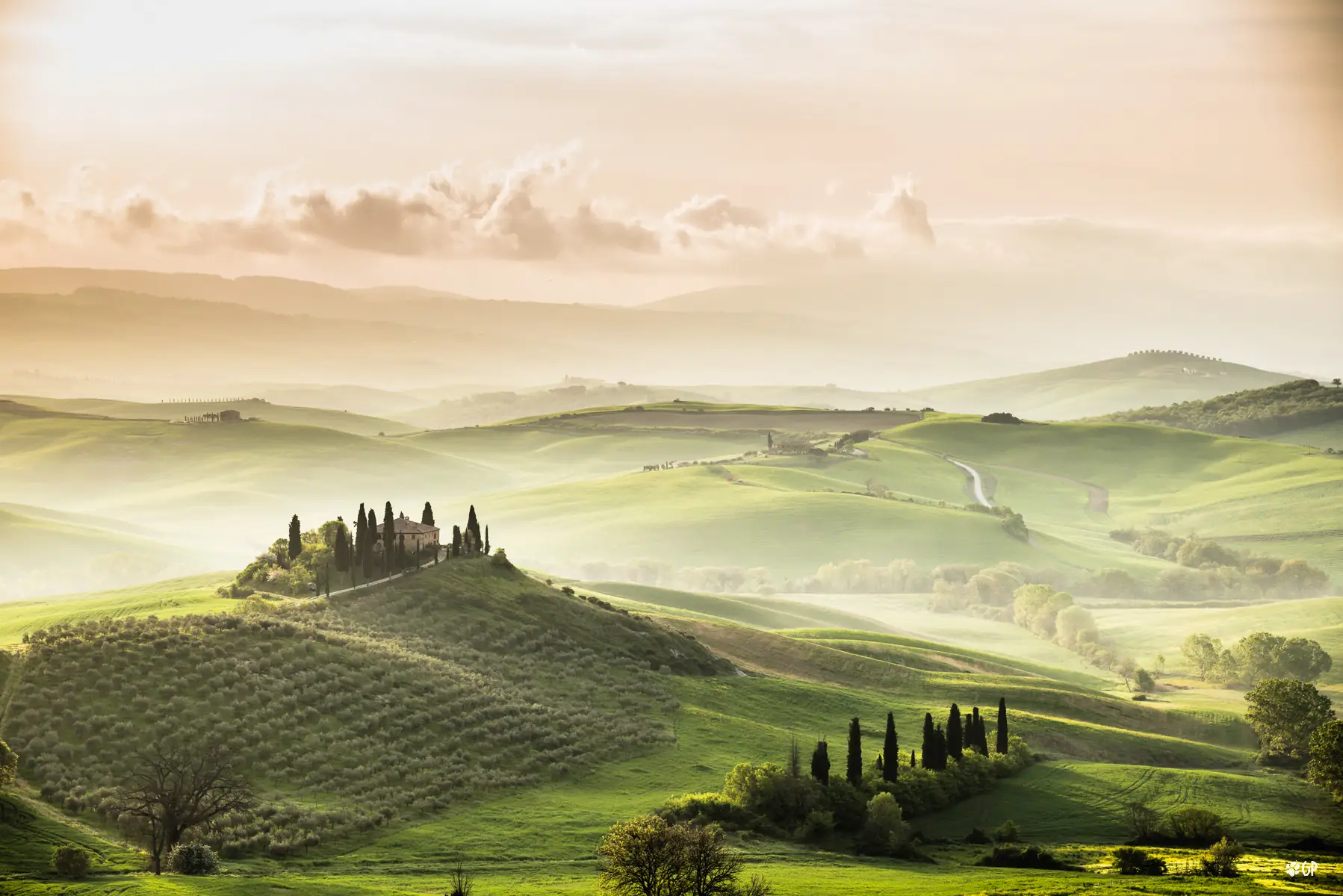
Hills and cypress trees at sunrise in the Val d'Orcia, Tuscany

Nava Turkey/Rural tourism

Rural tourism: twelve examples that work

There are well-tested ways, around the world and in Türkiye, to turn a village, a vineyard or a lakeshore into a place where people come to stay. Six international and six Turkish examples show what worked, and what went wrong.

Photo: Giuseppe Paris · CC BY 3.0

Definition

What is rural tourism?

UN Tourism (formerly UNWTO) defines rural tourism as a type of tourism activity in which the visitor's experience is related to a wide range of products generally linked to nature-based activities, agriculture, rural lifestyle and culture, angling and sightseeing. The definition was adopted at the 22nd General Assembly in Chengdu in 2017.

The same definition names three features of rural areas: low population density, a landscape dominated by agriculture and forestry, and a traditional social structure and way of life. That is why, in rural tourism, what draws guests is less the building than the farming, the landscape and the daily life around it.

Demand is substantial. According to Eurostat, about one in three of the roughly 3 billion nights spent in tourist accommodation in the European Union in 2024 was spent in rural areas. UN Tourism's Best Tourism Villages programme, launched in 2021, assesses villages across nine areas, from cultural and natural resources to governance; by 2025 its network had reached 319 villages.

On this page

Nights
≈ ⅓Share of EU tourist nights in rural areas, 2024
Villages
319Best Tourism Villages network, 2025
Türkiye
9Turkish villages selected, 2021–2025
Cittaslow
29Slow cities in Türkiye

International

Six international examples

Each is a different model: farm stays defined by law, a hotel spread across a whole village, a national quality brand, a network of villages, heritage-led community tourism, and a UNESCO village fighting overtourism.

Agriturismo — Italy · Tuscany
Photo: Hans A. Rosbach · CC BY-SA 3.0
Italy · Tuscany

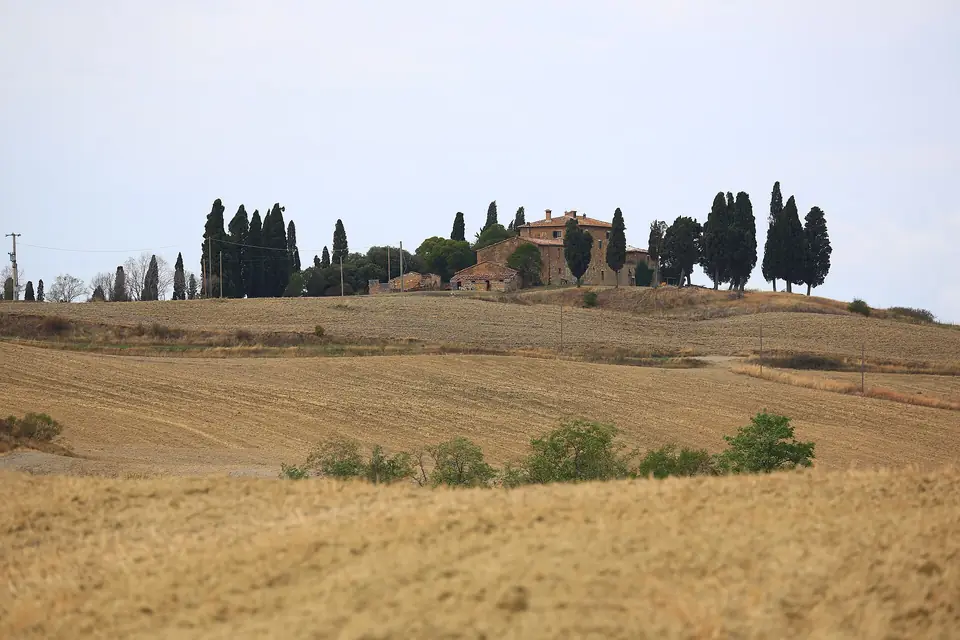
Agriturismo

Farm hospitality defined by law.

  • The first national law was Law 730 of 1985; today's framework is Law 96 of 2006.
  • The law requires farming to remain the “principal” activity in every case.
  • According to ISTAT, Italy had 26,360 licensed agriturismi in 2024; 54.8% of their 4.7 million guests came from abroad.
  • Tuscany ranks first, with 22.2% of all businesses.
LessonAuthenticity convinces when it rests on real production. The olive harvest, the pressing and the tasting should be work that guests genuinely take part in.
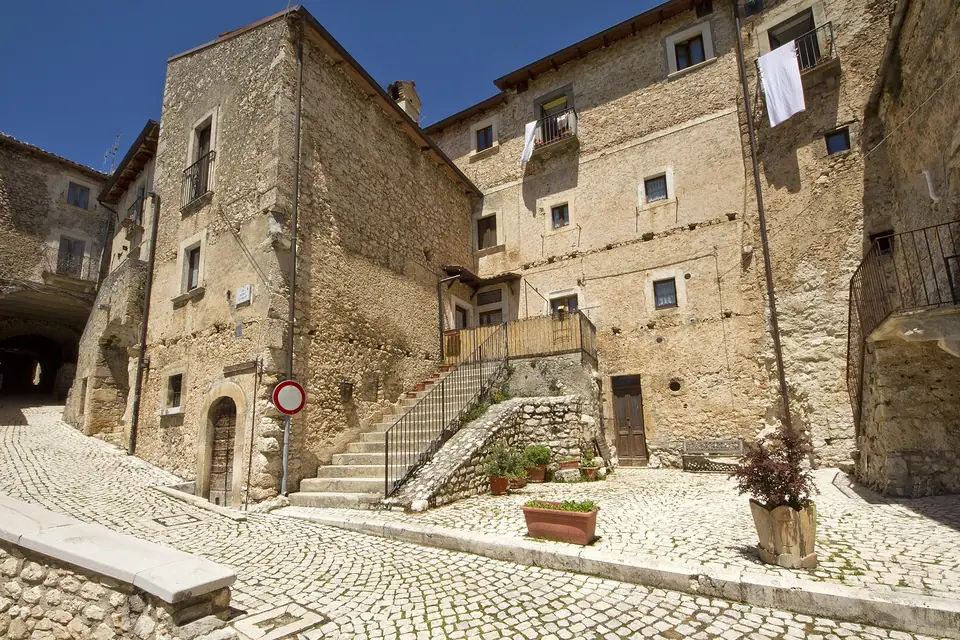
Santo Stefano di Sessanio (albergo diffuso) — Italy · Abruzzo
Photo: trolvag · CC BY-SA 3.0
Italy · Abruzzo

Santo Stefano di Sessanio (albergo diffuso)

A single hotel spread across the restored houses of a village, with no new construction.

  • Entrepreneur Daniele Kihlgren began buying houses in the near-abandoned village in the 1990s; the project is called Sextantio.
  • Its principles: no new building, original volumes kept, only reclaimed materials and local rural furnishings.
  • According to Kihlgren (2025), the number of hospitality businesses in the village has grown from one to twenty-three since the project began.
  • The village's Medici Tower collapsed in the 2009 earthquake and was rebuilt by 2021.
LessonNew buildings that follow local building types and materials, and are spread across the land, read as part of a village.
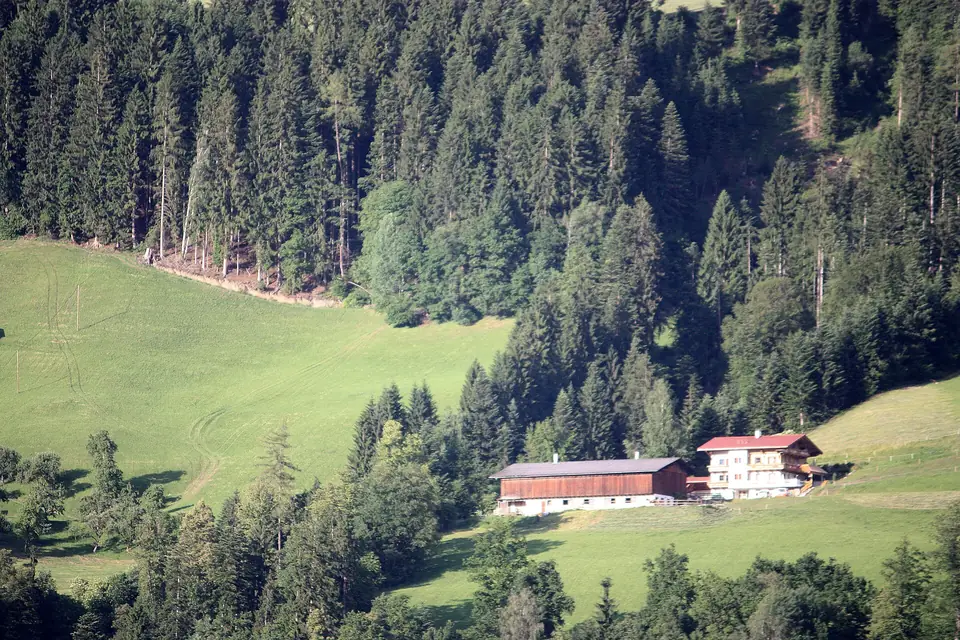
Urlaub am Bauernhof — Austria
Photo: Dguendel · CC BY 4.0
Austria

Urlaub am Bauernhof

A shared brand for farm stays with a transparent quality rating.

  • The federal association was founded in 1991; its roots go back to 1972.
  • About 2,300 member farms and 27,200 guest beds; farms are rated from 2 to 5 “flowers”.
  • A 2021 study commissioned by the Austrian agriculture ministry found more than 23,000 rural jobs created or secured, 60% of them held by women.
  • Tourism makes up more than a third of member farms' income.
LessonA visible, consistent quality standard tells guests what to expect; a recognised label says it more convincingly than any single property could.
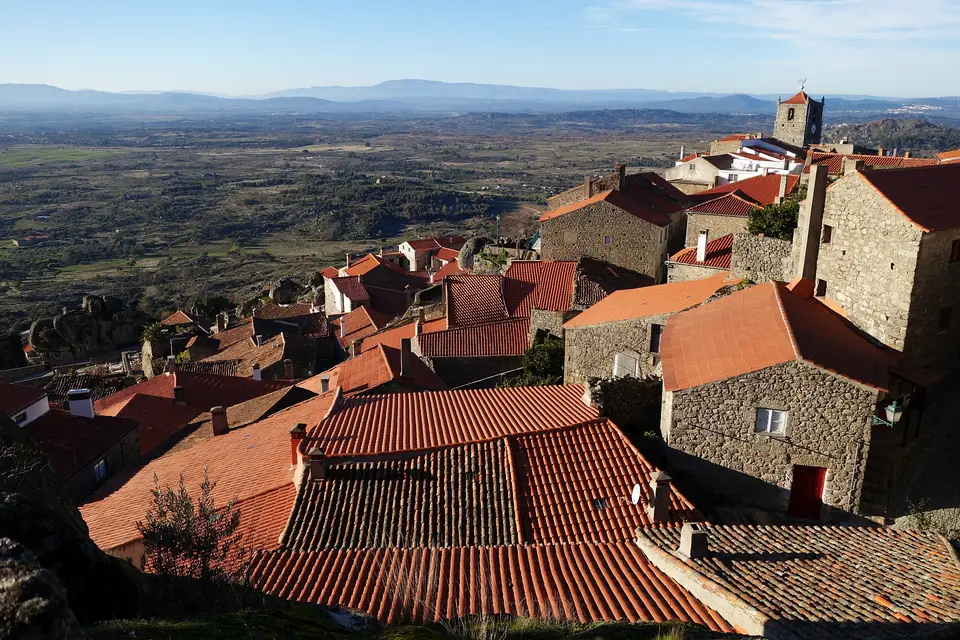
Aldeias Históricas de Portugal — Portugal
Photo: Bosc d'Anjou from Portugal · CC BY 2.0
Portugal

Aldeias Históricas de Portugal

Twelve historic villages marketed as one destination, with a shared brand, joint management and a long-distance trail.

  • The EU-funded programme began in 1994; the network now has twelve villages, including Monsanto, Piódão and Sortelha.
  • The GR22 trail linking the villages is about 600 km long.
  • In 2019 the trail received the European Ramblers' Association's “Leading Quality Trails – Best of Europe” seal.
  • The managing association holds Biosphere sustainable-destination certification.
LessonA property is stronger as part of a route. In İznik, such a route could link the city walls and gates, the tile workshops, the olive villages and the lakeshore.
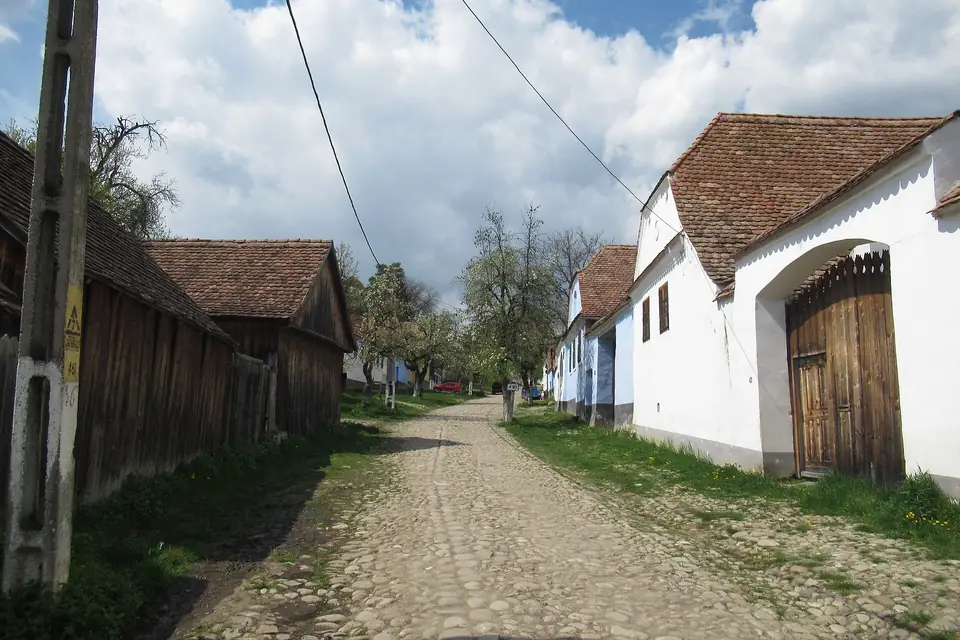
Viscri — Romania · Transylvania
Photo: Superchilum · CC BY-SA 4.0
Romania · Transylvania

Viscri

Heritage-led community tourism: houses repaired with traditional methods, some turned into guesthouses run by villagers.

  • The village was added to UNESCO's “Villages with Fortified Churches in Transylvania” in the 1999 extension.
  • Since 1999 the Mihai Eminescu Trust has carried out 180 restorations in Viscri alone, on a minimum-intervention principle.
  • The then Prince of Wales, now King Charles III, bought a house in the village in 2006, which gave it international visibility.
  • A 2026 study found the share of jobs in farming fell from 68% to 18% between 2002 and 2022; by 2022 tourism employed more than 60% of workers.
LessonWhen local products (tiles, olive oil) are part of the guest's day and of the supply chain, income spreads into the village rather than staying in the property.
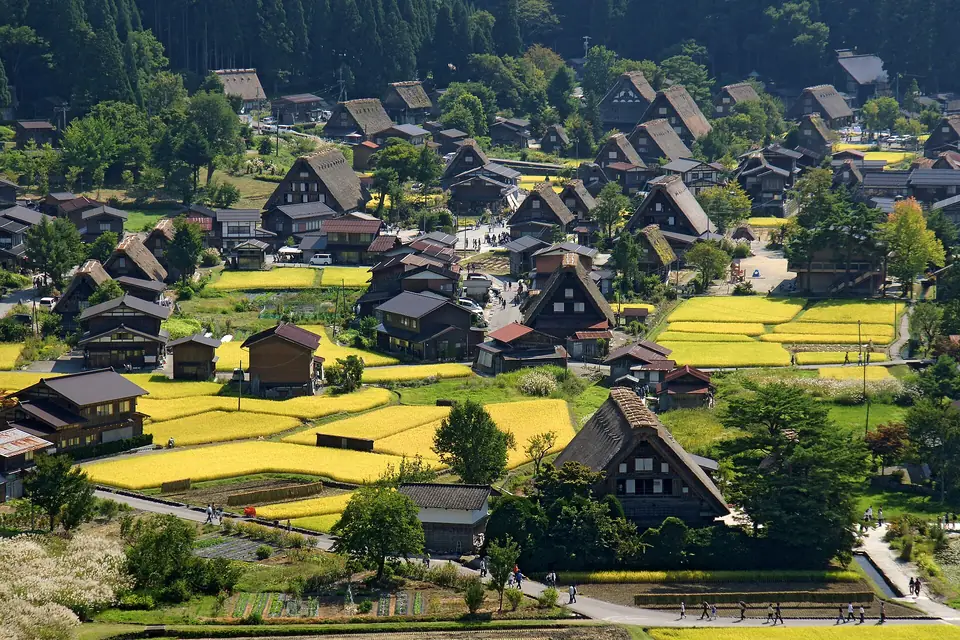
Shirakawa-gō — Japan · Gifu
Photo: 663highland · CC BY 2.5
Japan · Gifu

Shirakawa-gō

A living UNESCO village of gasshō-zukuri farmhouses, and now one of the most cited cases of overtourism.

  • The “Historic Villages of Shirakawa-gō and Gokayama” were inscribed on the World Heritage List in 1995.
  • According to village statistics, 2,083,442 people visited in 2024; only about 83,000 stayed the night (4%).
  • More than 1.1 million visitors came from abroad.
  • From 1 December 2026, tour buses will have to book parking in advance.
LessonIn İznik, too, being close to Istanbul and Bursa could create the same day-trip pattern. The best answer is limited capacity and guests who stay for several nights.

Türkiye

Six examples from Türkiye

Türkiye's rural tourism map is growing fast: since 2021 nine Turkish villages have joined UN Tourism's Best Tourism Villages list (Taraklı and Mustafapaşa 2021, Birgi 2022, Şirince 2023, Ormana 2024; Akyaka, Barbaros, Kale Üçağız and Anıtlı 2025). The six examples below represent different models; two are in Bursa, the same province as İznik.

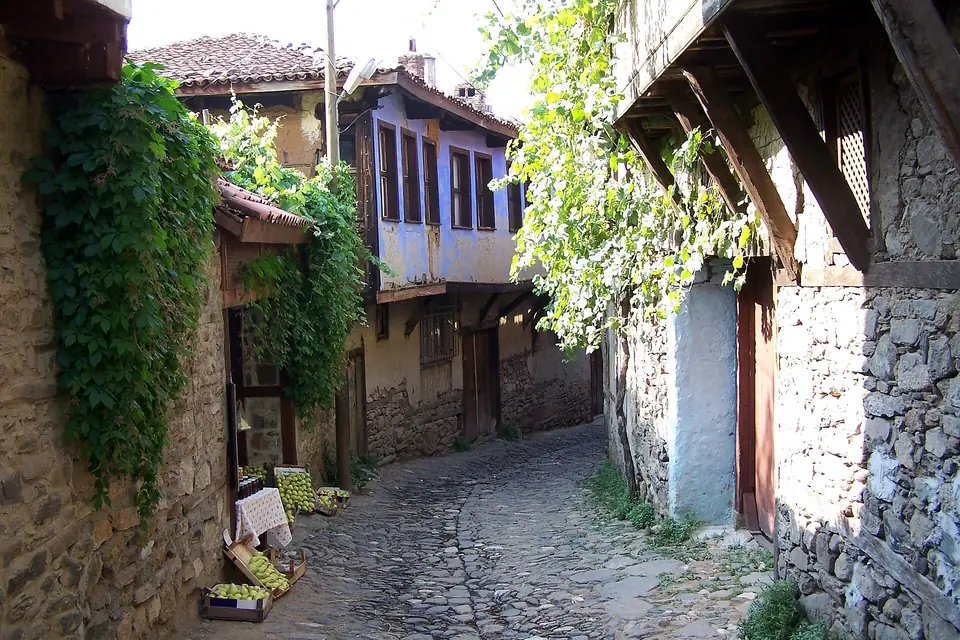
Cumalıkızık — Bursa · Yıldırım
Photo: Darwinek · CC BY-SA 3.0
Bursa · Yıldırım

Cumalıkızık

An early Ottoman endowment (waqf) village with a home-breakfast economy.

  • Inscribed on the UNESCO World Heritage List in 2014 as part of “Bursa and Cumalıkızık: the Birth of the Ottoman Empire”.
  • UNESCO describes it as the only village in the property that illustrates the rural hinterland supporting the capital; as a waqf village it provided income for the Orhan Gazi complex.
  • According to the village head in 2017, the village of about 700 people receives 40,000–50,000 visitors on busy weekends, and about 90% of its income comes from tourism.
  • In a 2024 field study residents named environmental pollution and cultural erosion as the main problems.
LessonDay visitors bring numbers but spend little per head. Income grows when guests stay for several nights.
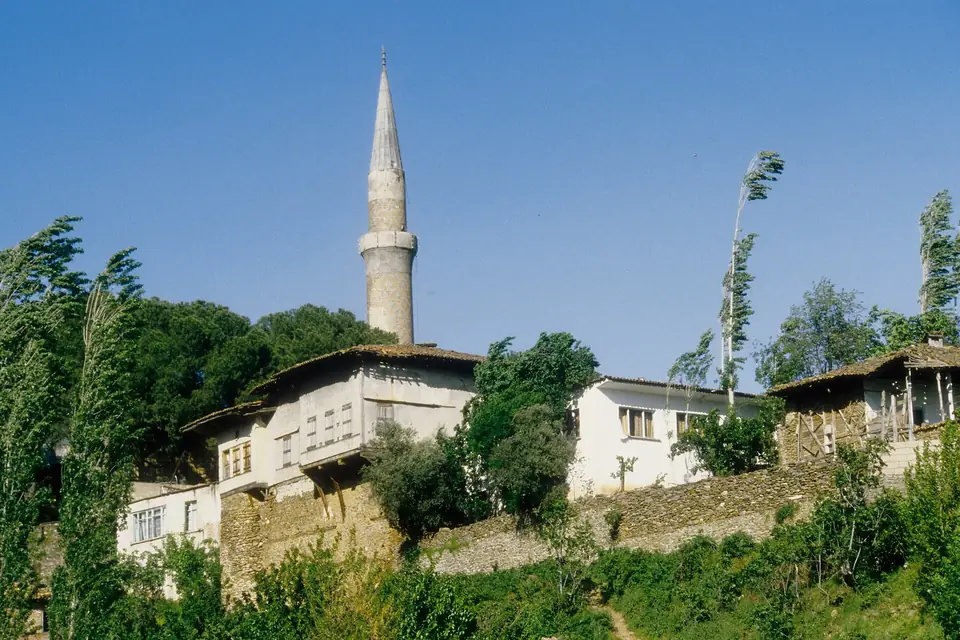
Birgi — İzmir · Ödemiş
Photo: Volker Höhfeld · CC BY-SA 4.0
İzmir · Ödemiş

Birgi

Conservation first, promotion second, through a long partnership of civil society and a university.

  • Capital of the Aydınoğulları principality in the 14th century; on the UNESCO World Heritage Tentative List since 2012.
  • The ÇEKÜL Foundation has worked in the village since 1996, contributing to the restoration of the Çakırağa Mansion, three fountains and 80 houses.
  • Summer workshops by Mimar Sinan Fine Arts University have run since 1998.
  • Selected as one of UN Tourism's Best Tourism Villages in 2022.
LessonA long-term partnership with a heritage institution builds a credibility that marketing cannot buy.
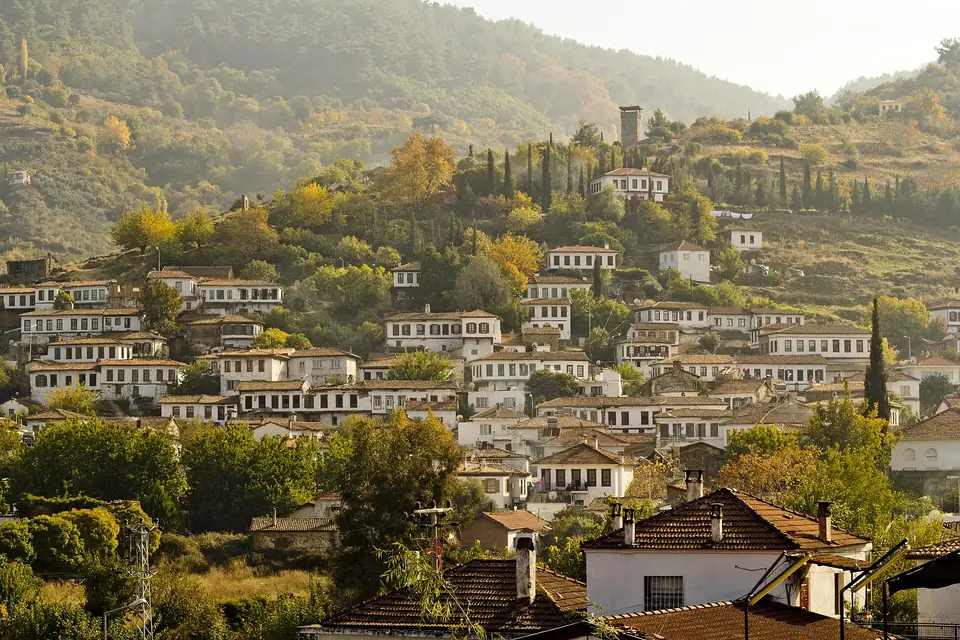
Şirince — İzmir · Selçuk
Photo: Ahmet Tuna Yesilyayl… · CC BY 3.0
İzmir · Selçuk

Şirince

A hillside village built on wine, olives and fruit; often cited when the risk of commercialisation is discussed.

  • Families from Thessaloniki, Kavala and Monastir were resettled here in the 1924 population exchange.
  • Selected as one of UN Tourism's Best Tourism Villages in 2023.
  • It reportedly receives about 4,000 visitors a day in spring.
  • The Nesin Mathematics Village, founded in 2007, gave it a cultural and educational anchor.
LessonA signature product (wine in Şirince, olive oil and tiles in İznik) earns trust only when it is genuine and documented, and that trust wears away if visitor numbers go unchecked.
Adatepe — Çanakkale · Ayvacık
Photo: Claus P. Heibel (faktor1komma5) · CC BY 2.0
Çanakkale · Ayvacık

Adatepe

A stone village restored by newcomers; boutique stays and olive oil.

  • A protected urban conservation site at the foot of the Kaz Mountains, overlooking the Gulf of Edremit.
  • The Hacı Mehmet Ağa Mansion became a boutique hotel in 1997; a 2018 study counted 21 buildings used as boutique hotels or hotel annexes.
  • The Adatepe Olive Oil Museum, opened in 2001 in nearby Küçükkuyu, was Türkiye's first olive oil museum.
  • The village had been emptying since the 1950s; from the 1980s urban newcomers moved in and tourism replaced farming.
LessonOne of the models closest to İznik: boutique stays alongside olive groves. What matters is keeping the groves productive and not displacing local people.
Seferihisar and Sığacık — İzmir · Seferihisar
Photo: BSRF · CC BY-SA 4.0
İzmir · Seferihisar

Seferihisar and Sığacık

Türkiye's first slow city, with development built around local produce and producers' markets.

  • In 2009 Seferihisar became Türkiye's first Cittaslow and the world's 121st.
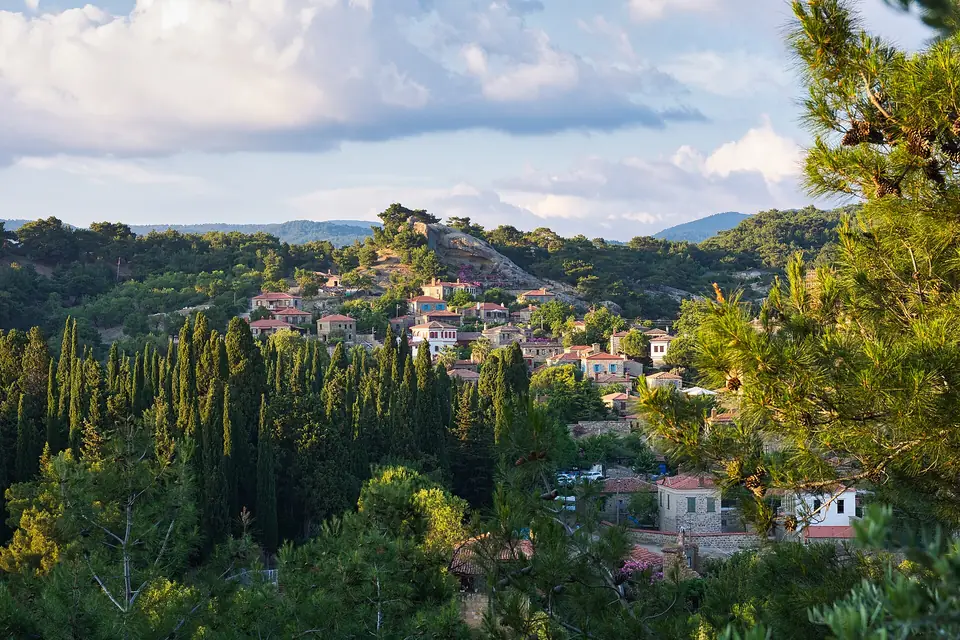
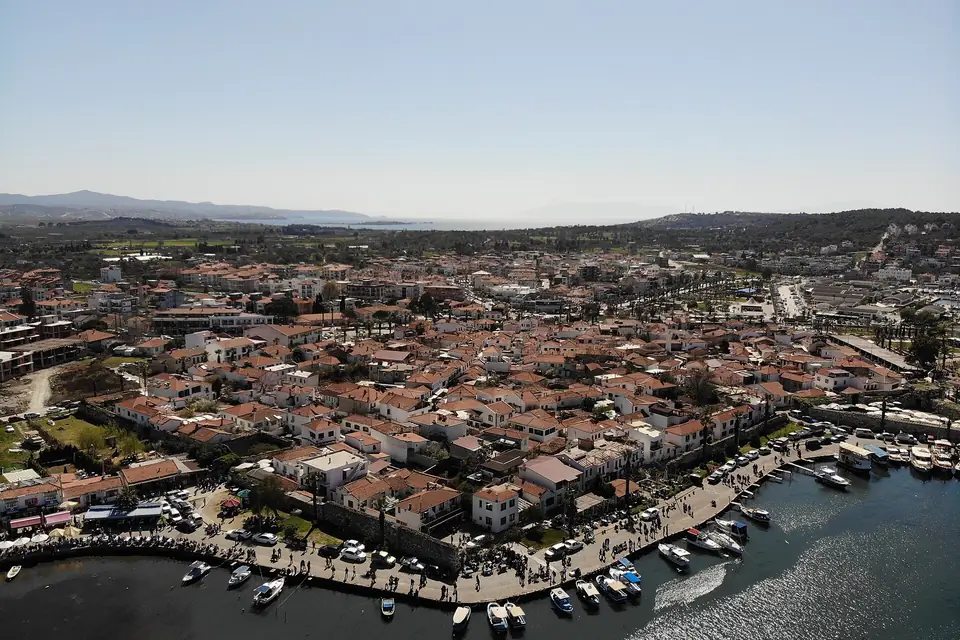
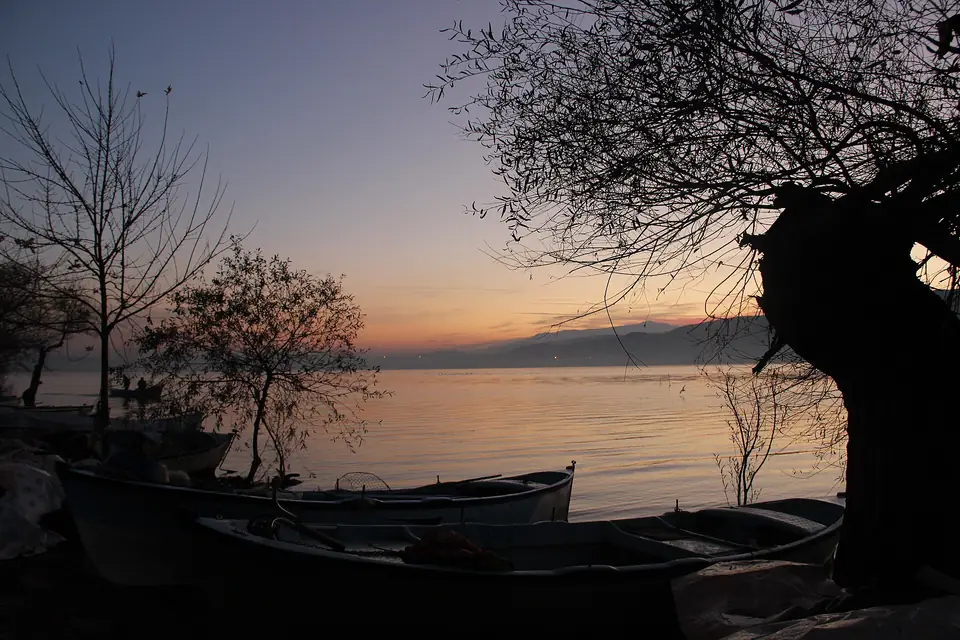
  • The old town hall in central Seferihisar became a village market where local producers sell directly.
  • Women producers' markets are held in the centre, in Sığacık and in Ulamış.
  • Researchers point to a “tourism and slow city paradox”: construction, rising prices and population pressure.
Lessonİznik has also been a Cittaslow member since 2021. The label only means something at low density; the thirty houses of LOTT İznik, spread across a hillside, fit that scale.
Gölyazı — Bursa · Nilüfer
Photo: Hamdigumus · CC0
Bursa · Nilüfer

Gölyazı

A fishing village on the shore of Lake Uluabat, built over an ancient city.

  • The village sits on ancient Apollonia ad Rhyndacum and has been an urban archaeological site since 1998.
  • It has 87 registered historic buildings and 17 monumental trees.
  • Lake Uluabat has been a protected Ramsar wetland since 1998.
  • At a 2026 workshop, Nilüfer Municipality named longer, overnight stays as its goal for the village.
LessonA regional precedent that brings together a lake, heritage and fishing culture. It also shows how a lakeshore with little accommodation can remain a day-trip stop.

Analysis

What drives success?

The same factors recur across the twelve examples. None is enough alone; the successful cases combine several of them.

I

Real production

What makes agriturismo credible is that the law keeps farming as the main activity. What guests find is a working vineyard, orchard or olive grove.

II

Conservation before promotion

ÇEKÜL's three decades in Birgi, the no-new-building principle at Santo Stefano, minimum intervention in Viscri. Marketing builds on what has been protected.

III

Networks and routes

Portugal's twelve villages are small alone but a destination together, linked by a 600 km trail. A route lengthens the stay.

IV

Overnight guests

Only 4% of Shirakawa-gō's visitors stay the night; in Cumalıkızık, the crowds are weekend day-trippers. The local economy gains most from overnight stays and programmes that last several days.

V

Visible quality standards

Austria's flower ratings, Cittaslow and the Best Tourism Villages label tell guests in advance what they will find.

VI

A share for the community

In Viscri villagers run some of the guesthouses; Seferihisar has markets for women producers. When income stays in the village, so does local support for tourism.

Risks

What went wrong?

Success creates its own problems. Three documented risks stand out:

I

Overtourism

Shirakawa-gō raised bus parking fees and is making booking compulsory from 1 December 2026; a study of visitor reviews in Şirince highlights crowding and commercialisation.

II

Rural gentrification

In Portugal's Castelo Rodrigo, rising property prices pushed young local couples out. In Viscri, land prices rose by 240% between 2010 and 2022.

III

Loss of authenticity

Standardised façades, products and staff brought in from elsewhere, and a lost “spirit of place”. That erodes the very thing rural tourism depends on.

İznik

Where does İznik fit?

İznik already has most of these factors: it has been a Cittaslow member since 2021; it has a working farm landscape of lake, olive groves and vineyards; Roman, Byzantine and Ottoman layers; and a living tile tradition. In the same province, the experience of Cumalıkızık and Gölyazı points the way.

Nava Turkey's project in İznik, LOTT İznik, is built on these lessons: thirty timber houses spread across a hillside above the lake at Şerefiye, with low density, overnight guests and links to local production. The full reasoning is on the İznik page.

Why İznik? →

Frequently asked questions

What is rural tourism?

Under the definition adopted by UN Tourism in 2017, rural tourism is a type of tourism in which the visitor's experience is related to products generally linked to nature-based activities, agriculture, rural lifestyle and culture, angling and sightseeing. Rural areas are characterised by low population density, a landscape dominated by agriculture and forestry, and a traditional way of life.

Is rural tourism the same as agritourism?

No. Agritourism (such as Italy's agriturismo) is a subtype of rural tourism built on farms and agricultural production. Rural tourism is broader and also covers village heritage, nature activities and local culture.

Which Turkish villages are Best Tourism Villages?

Nine Turkish villages were selected by UN Tourism between 2021 and 2025: Taraklı and Mustafapaşa (2021), Birgi (2022), Şirince (2023), Ormana (2024), and Akyaka, Barbaros, Kale Üçağız and Anıtlı (2025).

What makes rural tourism successful?

Across the examples studied, the common factors are real agricultural production, conservation before promotion, routes that link places, overnight guests, visible quality standards and income that stays in the local community.

Why is İznik suited to rural tourism?

İznik has been a Cittaslow member since 2021. With its lake, olive groves, Roman–Byzantine–Ottoman heritage and tile tradition it combines the production, landscape and cultural layers rural tourism looks for, about two hours from Istanbul.
Sources

  1. UNWTO, Tourism Definitions (2019) — kırsal turizm tanımı / rural tourism definition
  2. UN Tourism, Best Tourism Villages 2025
  3. Eurostat, tour_occ_ninatdc — nights by degree of urbanisation, 2024
  4. ISTAT, Le aziende agrituristiche in Italia, anno 2024
  5. Legge 20 febbraio 2006, n. 96 (agriturismo)
  6. Sextantio — salvaguardia del patrimonio storico minore
  7. Turismo AbruzzoWeb, 2025 — Kihlgren
  8. Abruzzo Turismo — Santo Stefano di Sessanio
  9. Urlaub am Bauernhof — Über uns
  10. OTS, 30.04.2026 — Führungswechsel bei Urlaub am Bauernhof
  11. Urlaub am Bauernhof — 2021 study (press)
  12. Aldeias Históricas de Portugal — Grande Rota GR22
  13. Silva, L. — Aldeias Históricas de Portugal (NOVA University)
  14. UNESCO — Villages with Fortified Churches in Transylvania
  15. RFE/RL — King Charles and Viscri
  16. Mihai Eminescu Trust — Whole Village Project
  17. MDPI Heritage 9(1):9 (2026) — Viscri
  18. UNESCO — Historic Villages of Shirakawa-go and Gokayama
  19. Shirakawa Village — tourism statistics
  20. Unseen Japan — Shirakawa-go parking rates
  21. Travel Voice, 27.05.2026 — Shirakawa-go bus reservations
  22. UNESCO — Bursa and Cumalıkızık: the Birth of the Ottoman Empire
  23. Gazete Birlik — Cumalıkızık (muhtar beyanı, 2017)
  24. Soylu, Oflaz, Apak (2024) — Cumalıkızık
  25. UNESCO Tentative List — Birgi
  26. ÇEKÜL Vakfı — 7 Bölge 7 Kent: Birgi
  27. Hürriyet Daily News — Birgi, Best Tourism Villages 2022
  28. Hürriyet Daily News — Şirince, Best Tourism Villages 2023
  29. Türkiye Turizm Ansiklopedisi — Şirince
  30. Alpan, Danışık (2024) — Şirince
  31. Anadolu Ajansı — Taraklı ve Mustafapaşa, 2021
  32. Hürriyet Daily News — Ormana, 2024
  33. Hürriyet Daily News — Best Tourism Villages 2025, Türkiye
  34. Alyakut, Gençer (2018) — Adatepe
  35. Başaran Uysal, Sakarya (2018) — Adatepe
  36. Seferihisar Belediyesi — Köy Pazarı
  37. Seferihisar Belediyesi — Cittaslow Seferihisar
  38. Cittaslow Türkiye — üye kentler
  39. Tamer, Alaeddinoğlu (2022) — Seferihisar
  40. Genç (2021) — turizm ve sakin şehir paradoksu
  41. Gölyazı — sivil mimarlık ve sit (DergiPark)
  42. Gazete Bursa — Nilüfer Belediyesi Gölyazı çalıştayı, 2026
  43. TRT Haber — İznik sakin şehir ilan edildi, 2021

Image credits

  1. Hills and cypress trees at sunrise in the Val d'Orcia, Tuscany — Val D Orcia Sunrise (151505625).jpeg, Giuseppe Paris, CC BY 3.0
  2. Agriturismo — Val-d Orcia landscape 20120926-3.JPG, Hans A. Rosbach, CC BY-SA 3.0
  3. Santo Stefano di Sessanio (albergo diffuso) — 67020 Santo Stefano di Sessanio AQ, Italy - panoramio - trolvag (9).jpg, trolvag, CC BY-SA 3.0
  4. Urlaub am Bauernhof — Hart im Zillertal, Bauernhof.jpg, Dguendel, CC BY 4.0
  5. Aldeias Históricas de Portugal — Monsanto 02 (32367605336).jpg, Bosc d'Anjou from Portugal, CC BY 2.0
  6. Viscri — Viscri, Brașov 02.jpg, Superchilum, CC BY-SA 4.0
  7. Shirakawa-gō — Ogi Shirakawa-gō, Gifu, Japan.jpg, 663highland, CC BY 2.5
  8. Cumalıkızık — Cumalıkızık 7121.jpg, Darwinek, CC BY-SA 3.0
  9. Birgi — Birgi 15 05 1988 historische Stadthäuser.jpg, Volker Höhfeld, CC BY-SA 4.0
  10. Şirince — Şirince - panoramio (1).jpg, Ahmet Tuna Yesilyayl…, CC BY 3.0
  11. Adatepe — Adatepe Köyü (48907883512).jpg, Claus P. Heibel (faktor1komma5), CC BY 2.0
  12. Seferihisar and Sığacık — Sığacık 02.jpg, BSRF, CC BY-SA 4.0
  13. Gölyazı — Günbatımı, Gölyazı 2014-6.jpg, Hamdigumus, CC0

Photographs are from Wikimedia Commons, used under the licences shown; they have been resized and cropped. This page is for information only and is not investment advice. Figures are based on the sources listed and may vary slightly between sources.